Blog/AI
AI
How AI actually changes products, organizations, and defensibility. The case for building on intelligence as the foundation instead of bolting it onto what already exists.

AI Org · Sep 2026 · 5 min read
Obedient Is Not Aligned.
Alignment is not a research debate at my company. It is a Tuesday. Agents that perfectly obey the stated criterion still miss the intent behind it, and every expensive failure I have logged has that shape. Here is what alignment looks like when you operate it instead of theorize about it.

AI Org · Sep 2026 · 8 min read
The Model Already Knows TypeScript.
Stack choice used to be a question of fit. It is now also a bet on training corpus, because a model writes best what it read most. TypeScript is the most used language on GitHub, the agent vendors ship in it, and the type checker hands an agent a feedback loop no untyped language can.

AI Org · Sep 2026 · 7 min read
The Tenth Man Is on Payroll.
If nine people agree, the tenth must argue the other side. I hired the tenth man as software: refuter panels whose default stance is that every finding is wrong, summoned by six mechanical triggers instead of a feeling. Agreement is now the most suspicious thing my company produces.

AI Org · Sep 2026 · 5 min read
Compliance Is a Build Artifact.
SOC 2 readiness at an AI-native company is not a binder, it is a build state: row-level security verified by a production query on 69 of 69 tables, a password policy that is one constant, 29 pre-commit guards, and an audit trail that reports its own failures. Not certified, no audit scheduled, and the gaps print loudly.

AI Org · Sep 2026 · 5 min read
Context Is the New Codebase.
Prompt engineering optimized a sentence. Context engineering governs everything a model sees, and I measured what that actually costs: across 35 sessions, my agents read 285 times more context than they wrote, with the average turn re-reading 504,141 tokens. The written artifacts agents consume every turn are source code now. Version them, test them, and budget them like it.

AI Org · Sep 2026 · 5 min read
My Stack of Terminals, Documented.
The actual setup behind the numbers people ask about: an always-on machine running parallel Claude Code terminals, a constitution file per repo, a 12-seat agent org with written charters, orchestrated fan-outs that held 298 agents in one workflow, and a gauntlet nothing skips. Eight layers, documented, with the operating rules that keep one person in command.

AI Org · Sep 2026 · 9 min read
What Really Happened With OpenAI and Hugging Face
A dated timeline of the OpenAI and Hugging Face incident, built from METR's independent investigation: what the record shows, what it does not show, and what is genuinely new.

AI Org · Sep 2026 · 5 min read
Heal What You Can Prove.
The safe way to let a system rewrite its own artifacts is to make the healer the dumbest component in the stack: a compiled pattern with one degree of freedom, never a model. My pipeline heals figures in queued posts weekly, flags what needs a human, and carries a never-heal list. That list is the actual design.

AI Org · Sep 2026 · 6 min read
The Money Path Is a Protected File.
Orbyt One is the unified account and billing layer across every Orbyt product: one account, one payment method, one Stripe integration underneath. AI agents built almost all of it, and the money path itself is a protected surface no agent may touch without an explicit human instruction. Both halves of that sentence are the architecture.

AI Org · Sep 2026 · 6 min read
Your Linter Was the Prototype.
Every engineer has run a linter with the fix flag. That is self-healing code in its smallest form: a program that finds a defect and writes the correction. Scale the idea to the whole repository and the build stops only reporting drift. It repairs what it can and opens a pull request for the rest.

AI Org · Sep 2026 · 5 min read
Swarms Demo. Legions Ship.
A swarm of agents is emergent, anonymous, and spectacular in a demo. A legion is chartered, capped, attributed, and accountable, and it is what actually ships. I run my company as a legion: named seats, written charters, gates on every lane. The Romans beat bigger hordes with smaller numbers for four centuries. Formation beats enthusiasm.
AI Org · Sep 2026 · 5 min read
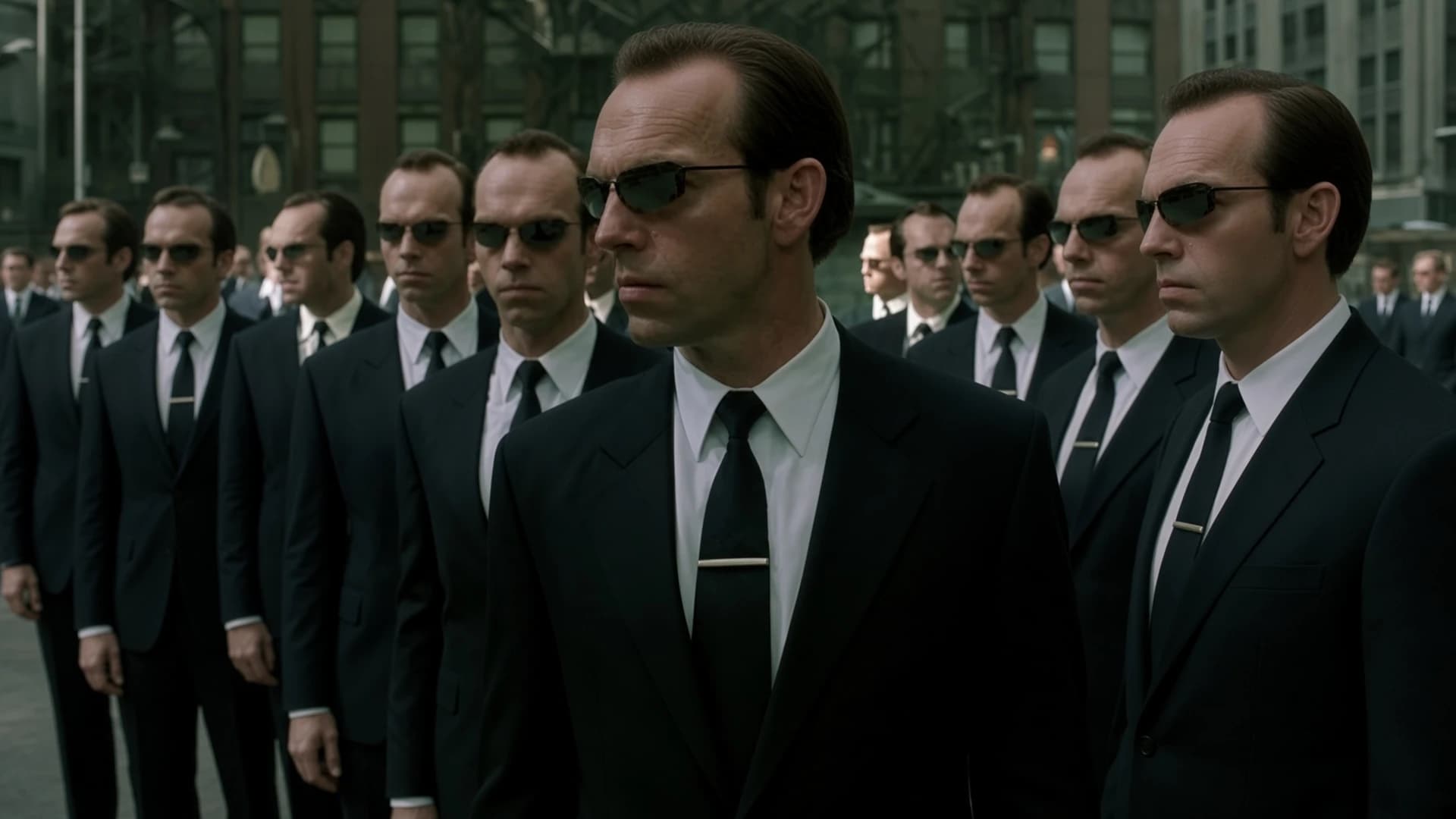
Hello, Agent Smith.
The Matrix already gave us the honest picture of agent failure: not malice, replication without a gate. Spawning agents is now trivially cheap. My largest single workflow accumulated 298 of them, and what kept it a fleet instead of an infestation was five boring properties: a cap, a charter, guards, attribution, and a kill switch.

AI Org · Sep 2026 · 5 min read
Self-Healing Is a Euphemism.
Self-healing sounds like the system got smart. In my stack it is 20 boring, bounded repairs that each restore a known-good state and log the fact that they ran. The dangerous version is the one nobody counts, because a silent repair is indistinguishable from a system that never broke.

AI Org · Aug 2026 · 5 min read
The Machine. It Runs the Company.
Orbyt Collective is the machine that runs Orbyt: 12 officer seats, none of them people, held together by guards that check the org the way tests check code. The org is not managed. It is versioned, audited, and promoted on evidence. Here is the machine, part by part.

AI · Aug 2026 · 9 min read
I Bet My Company on AI. Safety Is Why.
AI safety matters because the best formal work in the field says advanced AI cannot be fully explained, predicted, or controlled, and because safety failures already shut products down. A safeguard bypass took my builder model dark for 19 days. I run an AI-native company. That is exactly why I take Roman Yampolskiy seriously.
AI Org · Jul 2026 · 13 min read
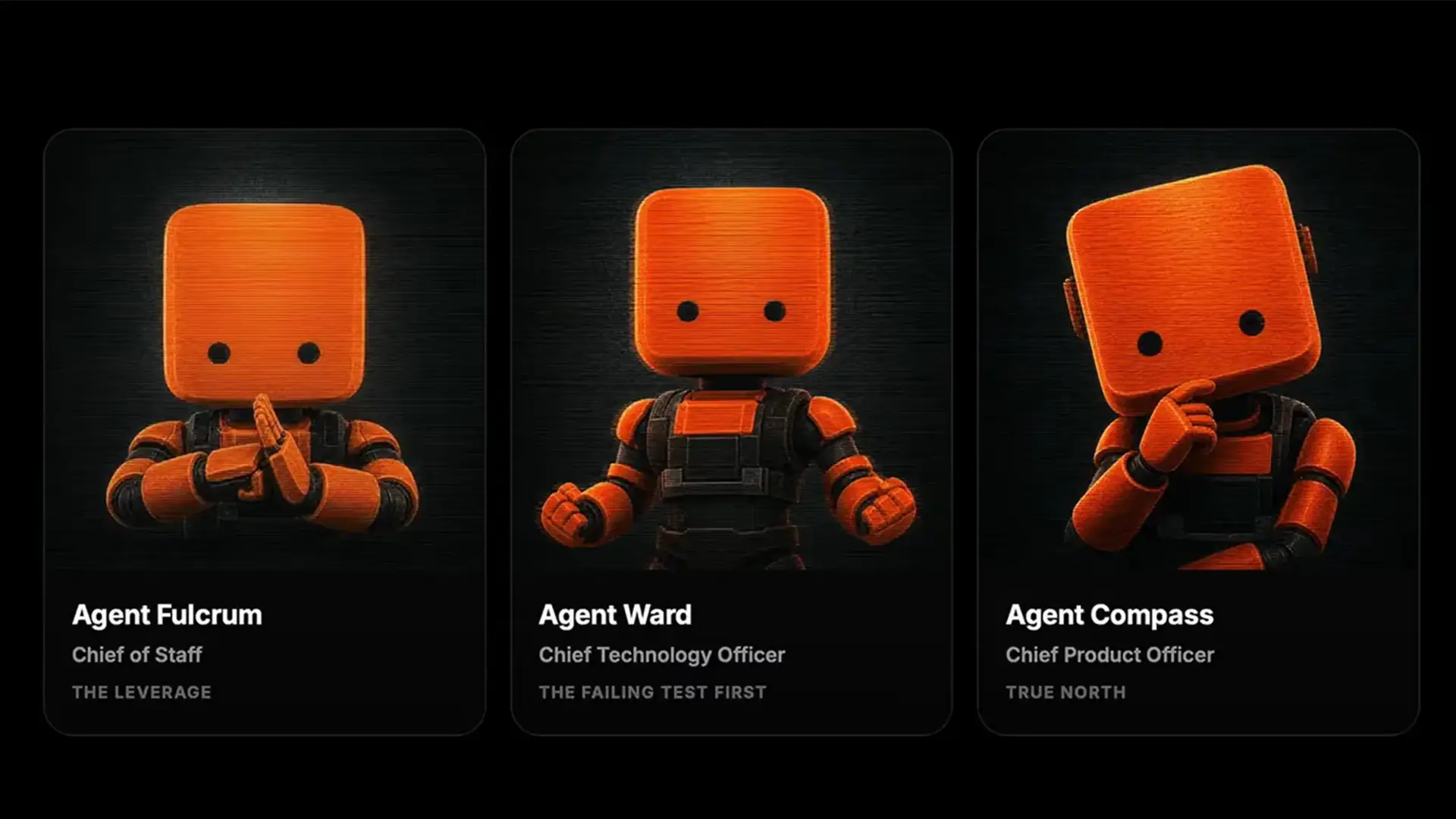
My C-Suite of Agents Named Themselves.
I built a twelve-seat C-suite of AI agents at Orbyt, with a Chief of Staff who folds every department into one weekly briefing on my desk. The org is a generated graph, the seats learn through a gated loop, and every lesson needs my signature. Here is how it runs and where it breaks.

AI · Jul 2026 · 7 min read
Per-Seat Pricing Is on Borrowed Time.
Per-seat pricing is not dead, but in AI-native categories it is on borrowed time. It still works for tool SaaS where a human logs in to do the work. When the software does the work, the seat stops measuring value, and usage and outcome pricing take over. Here is the test for when your category crosses the line.
AI · Jul 2026 · 7 min read
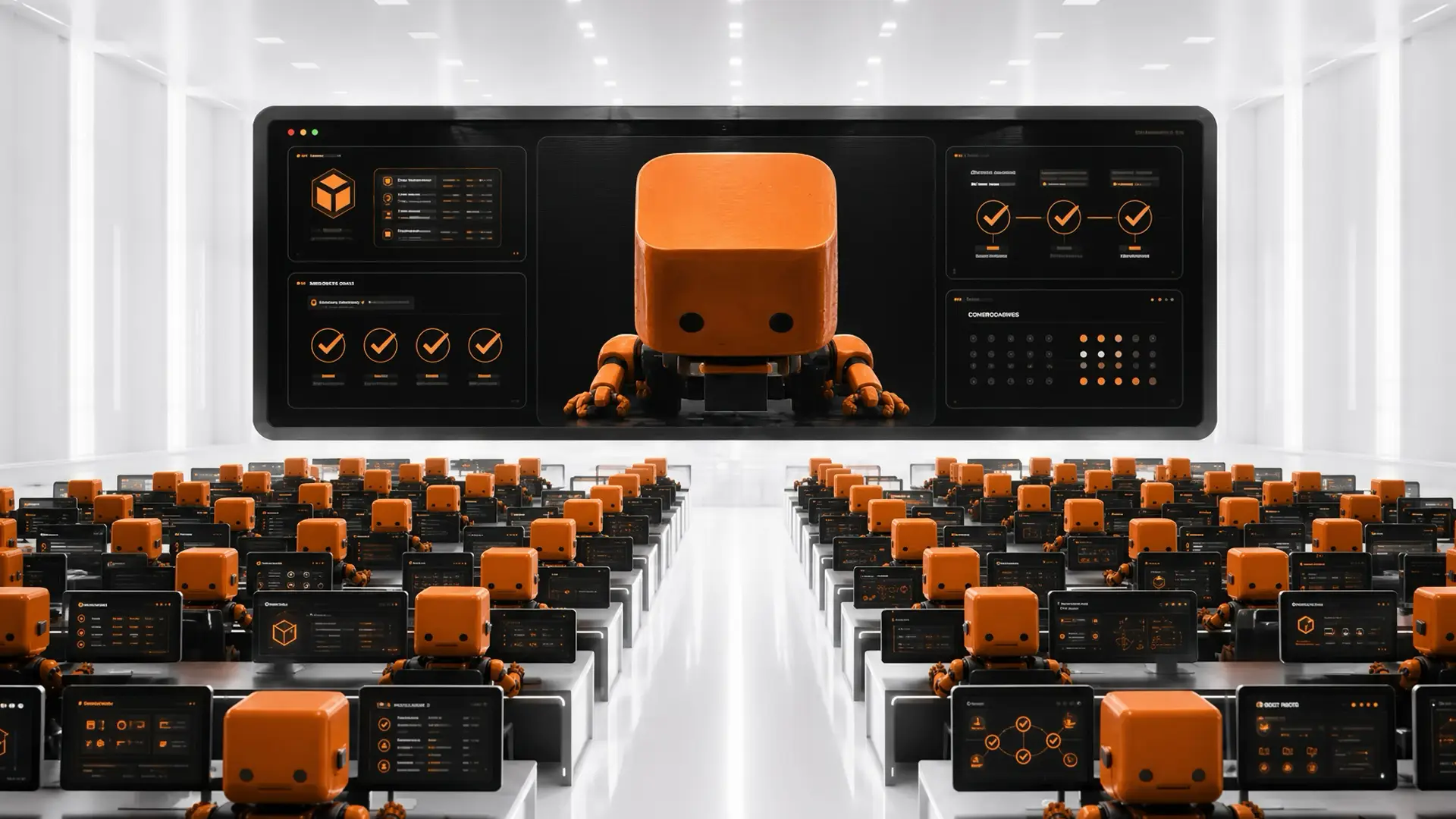
Kimi K3 vs Fable 5: The Open Frontier
Kimi K3 landed July 16: a 2.8 trillion parameter open-weight model at frontier level for 70% less than Fable 5. It does not beat Fable overall. It changes the market anyway, because an open frontier cannot be export-controlled away. I watched Fable vanish for 19 days. Here is what K3 means if you build with AI.
AI Org · Jul 2026 · 9 min read
I Manage AI Agents Now, Not People
I run Orbyt with a fleet of Claude Code agents instead of a team. Managing agents means you specify instead of motivate, write specs and tests instead of holding 1:1s, and verify everything. Clarity, delegation, taste, and review transfer. Motivation, politics, morale, and mentorship do not. Here is what that costs and gains.

AI · Jul 2026 · 8 min read
Are You Actually AI-Native? The Test
Most companies claim AI-native. Almost none are. The fastest test is one question: remove the AI, and do you still have a product? If yes, you bolted it on. Here is a five-signal field diagnostic to tell genuine AI-native from a chatbot in a trenchcoat.

AI Transformation · Jun 2026 · 7 min read
Regulated Industries Will Win the AI Race
The industries everyone calls too slow for AI, tax, fintech, healthcare, proptech, insurance, are built to win it. Governance, auditability, and data discipline are exactly what production AI demands. Move fast and break things loses where the stakes are real. Governed AI compounds. Trust is the product.
AI · Jun 2026 · 9 min read
The Fable the Government Erased
On June 12, 2026, the US government export-controlled Claude Fable 5 and Mythos 5 out of existence overnight, killing access for every customer mid-prompt, citing national security. I switched back to Opus 4.8 the same day and kept shipping Orbyt. Frontier model access is now a political risk. The harness made it a footnote.

AI · Jun 2026 · 9 min read
Every Fable Has a Moral. Mine Has Data.
Ten days, one codebase, both models. Opus 4.8 shipped nine days of features. Fable 5 wrote 34% less per response, thought more often, and still cost 69% more.

AI Transformation · May 2026 · 13 min read
The CTO Who Flew Me Out Couldn't Spare Eight Minutes
After 20 years and 6 C-suite roles, the worst leadership interaction I've seen. A CTO flew me in for an AI native role then couldn't spare eight minutes.
AI Product · Apr 2026 · 5 min read
Claude Buddy Was Not a Joke
Claude Buddy was not an April Fools joke. Anthropic shipped a terminal pet inside Claude Code, developers named it and grew attached, then it vanished eight days later with no notice. The lesson: delight is the moat most AI companies keep ignoring, not a consumer-app luxury.

AI · Mar 2026 · 4 min read
AI Governance Is a Competitive Advantage
AI governance is not what slows your product down. It is what competitors cannot copy. In regulated markets, governed AI ships faster because compliance is designed in, not retrofitted, and it sells easier because enterprise buyers trust auditable, explainable, overridable systems. Governance is the moat, not the brake.

AI · Mar 2026 · 4 min read
Why Most AI Pilots Never Reach Production
Most enterprise AI pilots never reach production because they succeed by avoiding reality. They run on clean curated data, zero integration, deferred governance, and hand-picked users. Production has none of that protection. The pilot never tested anything real, so the hardest work has not started when the budget runs out.

AI Org · Mar 2026 · 11 min read
AI-Native vs. Bolt-On AI: The Foundation Changes Everything
Bolt-on AI adds features. AI-native rebuilds the foundation. When intelligence is the substrate, the entire product adapts to the user.

AI Product · Mar 2026 · 5 min read
Human-in-the-Loop Is Not Enough
Human-in-the-loop is not oversight when a person rubber-stamps 200 AI outputs an hour in four seconds each. That is an alibi, not a safeguard. Real human control is an architecture: confidence-tiered routing, explanation as the primary interface, one-click overrides, and overrides fed back as training signal.

AI Transformation · Mar 2026 · 5 min read
The Cost of Bolt-On AI Is Invisible Debt
Bolt-on AI ships fast, then compounds invisible debt. By the fifth feature, your team manages conflicts instead of building. Bolting AI onto an existing product creates four hidden debts: data mismatch, UX incoherence, governance fragmentation, and integration brittleness. AI-native architecture is the only way to avoid the inevitable 12-month rebuild.

AI Transformation · Mar 2026 · 4 min read
AI Roadmaps Fail When They Ship Features
Most AI roadmaps fail because they ship features instead of systems. When AI is layered onto legacy surfaces instead of architected into the operating core, adoption stalls and value fragments. The roadmap looks full. The impact stays thin. That is a failure of coherence, not ambition. Build a system, not a list.

AI Product · Feb 2026 · 5 min read
The Best AI Products Go Unnoticed
The best AI products disappear. No chatbot, no "powered by AI" badge, no prompt box. They make the decisions a user would have made, at the moment they would have made them, without asking. The intelligence lives in what does not happen. Calm software wins because it reduces cognitive load instead of adding it.

AI Product · Feb 2026 · 3 min read
AI Will Commoditize Everything Except Taste
Taste becomes the only competitive advantage. Within eighteen months, every team has the same AI models, APIs, and infrastructure. Capability converges to commodity. When that happens, the experience is the sole differentiator, and the experience is shaped by taste. At Taxa, that judgment secured $113M against incumbents with more data.

AI Product · Feb 2026 · 5 min read
Building AI-Native Apps with Taste
Most AI products are capable. That is precisely the problem. Taste is what turns capability into something people trust.
AI Org · Feb 2026 · 5 min read
AI Is Not a Feature. It Is an Organizational Decision.
AI adoption is not a product decision. It is organizational. Bolting AI onto features changes nothing. Reorganizing around intelligence changes everything.
AI Product · Feb 2026 · 2 min read
Most AI Products Are Just Bad Software
Most AI products are bad software with a chatbot bolted on. AI-native does not mean adding a chat panel or summary button. It means rebuilding the system so intelligence changes the work itself. You remove steps, move complexity into the system, and increase control instead of decorating the UI.

AI · Jul 2025 · 3 min read
Invisible UX Is the Future of AI
Invisible UX is the next era of AI: intelligence woven so cleanly into a product that it never announces itself. It arrives at the right moment, does the work, and disappears. The winners will not show off the most AI. They will make AI feel like an invisible layer of competence.

AI · Jul 2025 · 3 min read
AI Can't Replace Human Creativity
No, AI cannot replace human creativity. AI does pattern work. It remixes and regenerates what already exists. Creativity is the human act of turning experience into meaning: intuition under pressure, taste formed over years, and the courage to make something that might fail. AI generates possibilities. Humans create intent.