Blog/Strategy
Strategy
Where AI-native meets the business case: moats, defensibility, and the decisions that compound. Why being genuinely AI-native is the advantage competitors cannot buy.

Strategy · Sep 2026 · 9 min read
Twelve seats, no people, and a check that blocks my own commits
Twelve agent seats run this codebase, nine of them on a schedule. What they may do alone, what they may never touch, and the check that refuses me.

Strategy · Sep 2026 · 9 min read
Half the failures were the instruments, not the code
Thirty three of sixty six logged failures were the instruments themselves. Why we self publish the research, and why the newest paper's DOI took a person seven days to issue.

Strategy · Sep 2026 · 9 min read
The Agent Org Chart, Hello Collective.
Twelve agents, one human, one lever. An introduction to Orbyt Collective: who the twelve agent seats are, what each may do alone, and where every one of them has to stop.

Strategy · Sep 2026 · 7 min read
Orbyt Was Not Planned. It Was Corrected.
I have no roadmap that predicted this company. I have three published append-only records holding 66 documented failures, 45 numbered decisions and 65 agent runs, all under a licence anyone can cite. 42 of the failures name a countermeasure by file path. The interesting part is what the records will not claim.

Strategy · Sep 2026 · 9 min read
Three agents picked the same name. I published the collision.
An agent leadership team runs Orbyt Labs. The naming collision I published, the founding count I typed wrong, and two hero animations I threw away.
Strategy · Aug 2026 · 8 min read
One Lab to Rule Them All
We renamed Orbyt Jobs to Orbyt Labs on August 20, 2026. Two of our products help you get a job. The third is an experiment in not needing one. A company named after one product could not hold that contradiction, and a lab can.

Strategy · Aug 2026 · 5 min read
The Wrapper Won.
In 2023, wrapper was an insult: a thin app over someone else's model, doomed when the model ate it. In 2026 the application layer captured the value while frontier models commoditized into swappable engines. I replaced the model under Orbyt twice, once by government order, and nothing broke. The moat was never the model. It was everything wrapped around it.

Strategy · Aug 2026 · 9 min read
Your Moat Is Now an Anchor.
Your moat is now an anchor when the scale, codebase, and process that protected you become the reason you cannot rebuild AI-native. The challenger starts on the foundation you cannot afford to switch to. Incumbents do not lose to AI startups on talent. They lose because their switching cost is the moat itself.

Strategy · Aug 2026 · 6 min read
AEO: No One Has the Answer Key
No answer engine publishes how it picks citations, and most AEO statistics come from vendors selling AEO services. That does not make the work optional. It makes it an experiment. The honest version: instrument first, invest only in what survives a ranking change, and measure citations against pipeline instead of rankings.

Strategy · Aug 2026 · 6 min read
Your AI Stack Needs a Foreign Policy.
Model access is now geopolitical. I watched Washington erase Fable 5 for 19 days, then watched Beijing ship Kimi K3, an open-weight frontier model no directive can recall. Your AI stack needs a foreign policy: sourcing across jurisdictions, qualified fallbacks, and architecture that treats every model as swappable. Boards that skip this are betting the product on politics.

Strategy · Aug 2026 · 9 min read
You Bought for Speed. Now You Build for It.
Build vs buy is not dead. The calculus inverted. You used to buy because building was slow and expensive. AI collapsed both. The old buy-for-speed default is gone. The new rule is to build what compounds your edge and rent only true commodity. Orbyt proves the new build cost is days and a few hundred dollars.

Strategy · Jul 2026 · 6 min read
Your Next Customer Is an Agent.
AI agents are becoming buyers. Gartner expects 25% of enterprise software purchases to involve agent mediation by the end of 2026, and zero-click commerce is moving discovery, comparison, and checkout inside the AI conversation. GEO got you quoted. The next step is being chosen: machine-readable products, agent-friendly pricing, and APIs a buyer's bot can act on.

Strategy · Jul 2026 · 7 min read
Speed Became a Moat
When the cost of building collapses, velocity stops being a nice-to-have and becomes a structural moat. Speed compounds. Faster shipping means faster learning loops, and learning loops widen the lead like interest. Orbyt shipped 243,000 lines in 32 days and never slowed down. The mechanism, the math, and why iteration speed is now defensibility.

Strategy · Jun 2026 · 8 min read
The Rise of Small AI-Native Companies
Tiny AI-native teams now out-ship incumbents. One operator with agentic tooling builds what used to take fifty people. Orbyt is the proof: production SaaS, solo, 32 days, about $400. Incumbents cannot match the speed, because their bottleneck is headcount and process, not talent.
Strategy · Jun 2026 · 15 min read
Everyone Says AI-Native. Almost No One Is. That's the Moat.
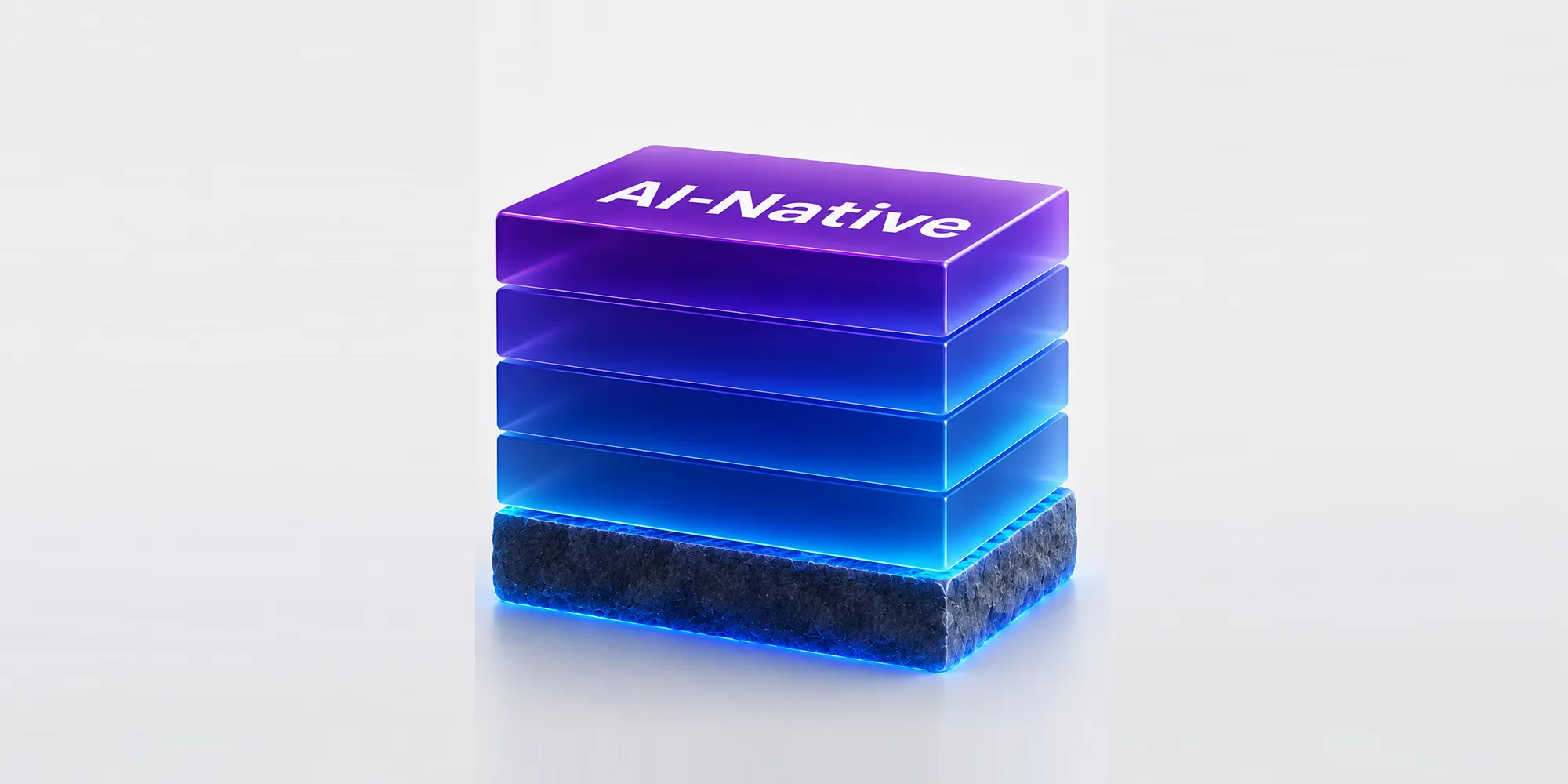
Every company claims AI-native. Almost none are. The few that build intelligence as the foundation, not a bolt-on, own a moat the rest cannot cross.

Strategy · Feb 2026 · 3 min read
Startups Win with Clarity, Not Complexity
Most startups don't die from lack of ambition. They die from noise. In the early days the real threat isn't competition, it's confusion. Confused teams ship clutter, clutter creates hesitation, and hesitation kills momentum. Clarity beats completeness, it drives word of mouth, and it is your go to market strategy.

Strategy · Sep 2025 · 3 min read
Startups Need Taste, Not Design Systems
A startup does not need a design system on day one. It needs taste. Systemizing too soon mistakes consistency for quality, and a lifeless system only scales lifelessness. Start with a point of view, uncompromising decisions, and one flow crafted until it feels inevitable. Build something undeniably right first, then standardize it.

Strategy · Jul 2025 · 3 min read
Zero-to-One Is a Taste Game
Taste decides whether an early stage product wins. Zero to one is not a tech race or a feature contest. Speed is table stakes because everyone moves fast. The real differentiator is judgment: knowing what to build, what to cut, and what to walk away from while everything is still ambiguous.

Strategy · Jul 2025 · 4 min read
Product Design for Strategy and Growth
Sustainable growth is a design problem, not a system problem. You can buy attention and hack acquisition, but if a product feels clunky or transactional, people leave. Design is the first signal of trust and the deepest growth lever. Behind every metric is a human, and every human carries an experience.

Strategy · Jul 2025 · 3 min read
Design Is Not a Stage It Is the Strategy
Design is not what happens after you decide what to build. It is how you decide if something is worth building at all. Design is discovery. It puts the idea in your hands early, makes confusion obvious, and turns uncertainty into something you can test. Bring it in last and you pay for everything you never saw.