Blog/AI Org
AI Org
18 articles on ai org

AI Org · Sep 2026 · 5 min read
Obedient Is Not Aligned.
Alignment is not a research debate at my company. It is a Tuesday. Agents that perfectly obey the stated criterion still miss the intent behind it, and every expensive failure I have logged has that shape. Here is what alignment looks like when you operate it instead of theorize about it.

AI Org · Sep 2026 · 8 min read
The Model Already Knows TypeScript.
Stack choice used to be a question of fit. It is now also a bet on training corpus, because a model writes best what it read most. TypeScript is the most used language on GitHub, the agent vendors ship in it, and the type checker hands an agent a feedback loop no untyped language can.

AI Org · Sep 2026 · 7 min read
The Tenth Man Is on Payroll.
If nine people agree, the tenth must argue the other side. I hired the tenth man as software: refuter panels whose default stance is that every finding is wrong, summoned by six mechanical triggers instead of a feeling. Agreement is now the most suspicious thing my company produces.

AI Org · Sep 2026 · 5 min read
Compliance Is a Build Artifact.
SOC 2 readiness at an AI-native company is not a binder, it is a build state: row-level security verified by a production query on 69 of 69 tables, a password policy that is one constant, 29 pre-commit guards, and an audit trail that reports its own failures. Not certified, no audit scheduled, and the gaps print loudly.

AI Org · Sep 2026 · 5 min read
Context Is the New Codebase.
Prompt engineering optimized a sentence. Context engineering governs everything a model sees, and I measured what that actually costs: across 35 sessions, my agents read 285 times more context than they wrote, with the average turn re-reading 504,141 tokens. The written artifacts agents consume every turn are source code now. Version them, test them, and budget them like it.

AI Org · Sep 2026 · 5 min read
My Stack of Terminals, Documented.
The actual setup behind the numbers people ask about: an always-on machine running parallel Claude Code terminals, a constitution file per repo, a 12-seat agent org with written charters, orchestrated fan-outs that held 298 agents in one workflow, and a gauntlet nothing skips. Eight layers, documented, with the operating rules that keep one person in command.

AI Org · Sep 2026 · 9 min read
What Really Happened With OpenAI and Hugging Face
A dated timeline of the OpenAI and Hugging Face incident, built from METR's independent investigation: what the record shows, what it does not show, and what is genuinely new.

AI Org · Sep 2026 · 5 min read
Heal What You Can Prove.
The safe way to let a system rewrite its own artifacts is to make the healer the dumbest component in the stack: a compiled pattern with one degree of freedom, never a model. My pipeline heals figures in queued posts weekly, flags what needs a human, and carries a never-heal list. That list is the actual design.

AI Org · Sep 2026 · 6 min read
The Money Path Is a Protected File.
Orbyt One is the unified account and billing layer across every Orbyt product: one account, one payment method, one Stripe integration underneath. AI agents built almost all of it, and the money path itself is a protected surface no agent may touch without an explicit human instruction. Both halves of that sentence are the architecture.
AI Org · Sep 2026 · 6 min read
Your Linter Was the Prototype.
Every engineer has run a linter with the fix flag. That is self-healing code in its smallest form: a program that finds a defect and writes the correction. Scale the idea to the whole repository and the build stops only reporting drift. It repairs what it can and opens a pull request for the rest.

AI Org · Sep 2026 · 5 min read
Swarms Demo. Legions Ship.
A swarm of agents is emergent, anonymous, and spectacular in a demo. A legion is chartered, capped, attributed, and accountable, and it is what actually ships. I run my company as a legion: named seats, written charters, gates on every lane. The Romans beat bigger hordes with smaller numbers for four centuries. Formation beats enthusiasm.
AI Org · Sep 2026 · 5 min read
Hello, Agent Smith.
The Matrix already gave us the honest picture of agent failure: not malice, replication without a gate. Spawning agents is now trivially cheap. My largest single workflow accumulated 298 of them, and what kept it a fleet instead of an infestation was five boring properties: a cap, a charter, guards, attribution, and a kill switch.

AI Org · Sep 2026 · 5 min read
Self-Healing Is a Euphemism.
Self-healing sounds like the system got smart. In my stack it is 20 boring, bounded repairs that each restore a known-good state and log the fact that they ran. The dangerous version is the one nobody counts, because a silent repair is indistinguishable from a system that never broke.

AI Org · Aug 2026 · 5 min read
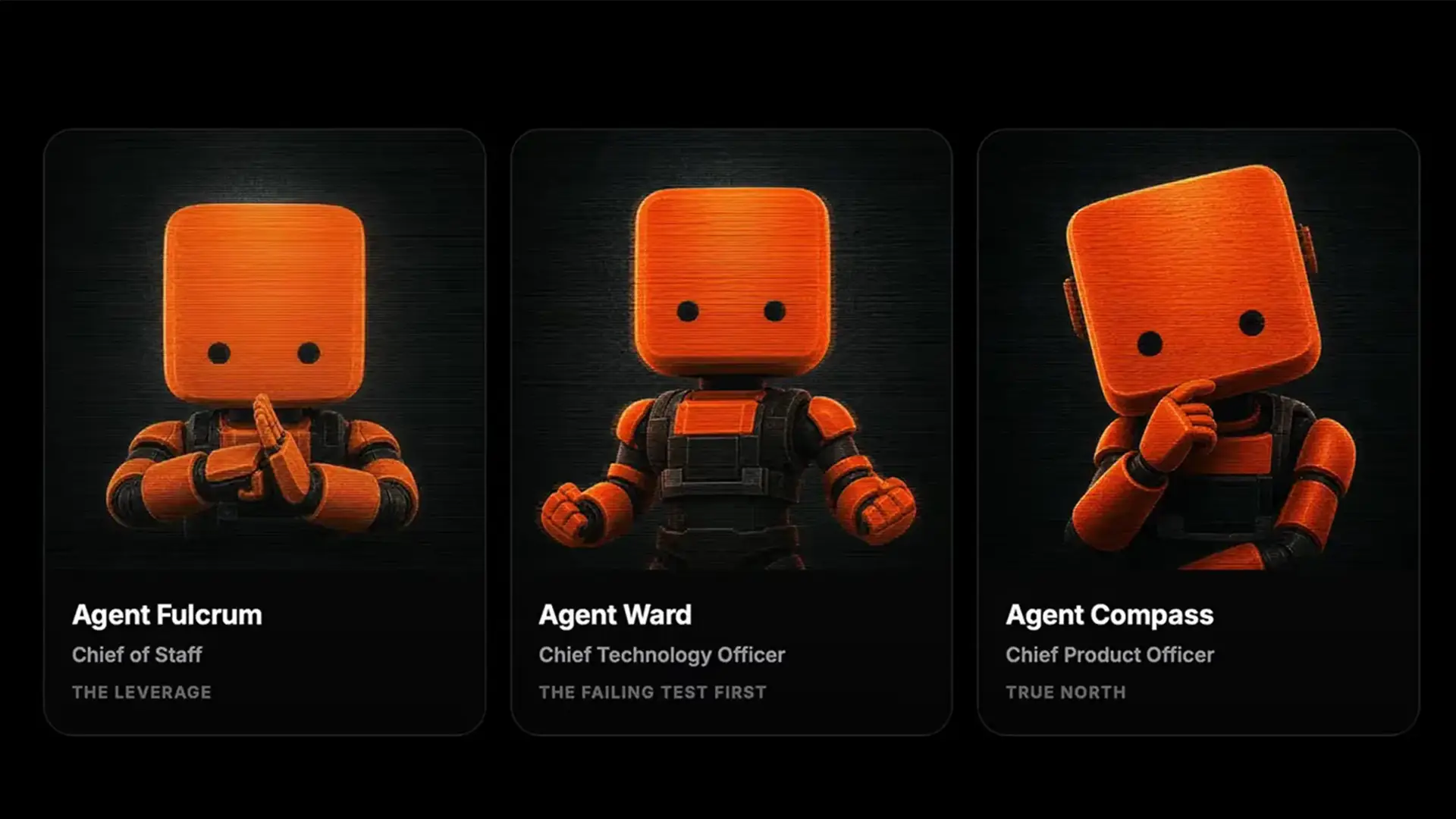
The Machine. It Runs the Company.
Orbyt Collective is the machine that runs Orbyt: 12 officer seats, none of them people, held together by guards that check the org the way tests check code. The org is not managed. It is versioned, audited, and promoted on evidence. Here is the machine, part by part.
AI Org · Jul 2026 · 13 min read
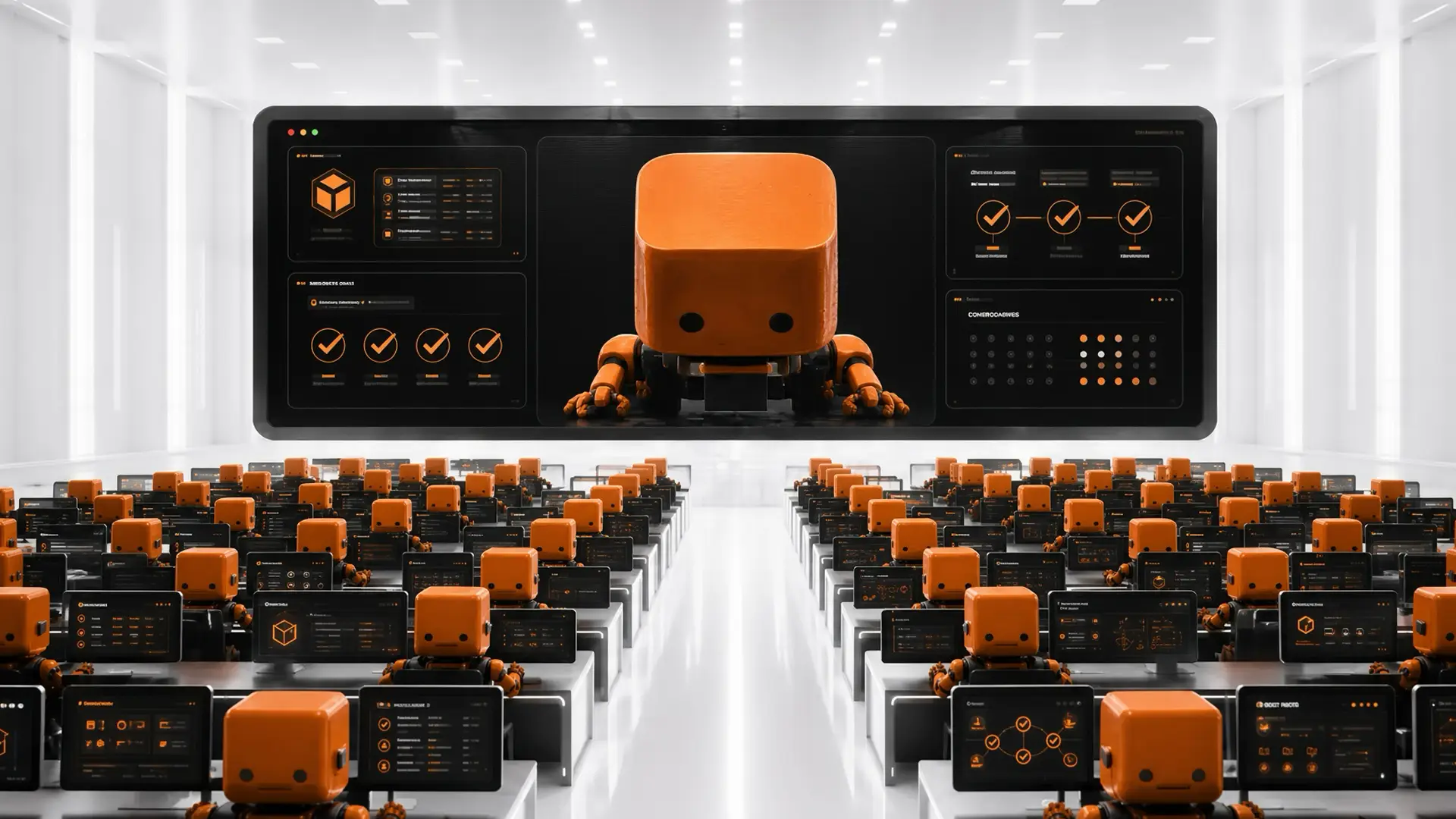
My C-Suite of Agents Named Themselves.
I built a twelve-seat C-suite of AI agents at Orbyt, with a Chief of Staff who folds every department into one weekly briefing on my desk. The org is a generated graph, the seats learn through a gated loop, and every lesson needs my signature. Here is how it runs and where it breaks.
AI Org · Jul 2026 · 9 min read
I Manage AI Agents Now, Not People
I run Orbyt with a fleet of Claude Code agents instead of a team. Managing agents means you specify instead of motivate, write specs and tests instead of holding 1:1s, and verify everything. Clarity, delegation, taste, and review transfer. Motivation, politics, morale, and mentorship do not. Here is what that costs and gains.

AI Org · Mar 2026 · 11 min read
AI-Native vs. Bolt-On AI: The Foundation Changes Everything
Bolt-on AI adds features. AI-native rebuilds the foundation. When intelligence is the substrate, the entire product adapts to the user.
AI Org · Feb 2026 · 5 min read
AI Is Not a Feature. It Is an Organizational Decision.
AI adoption is not a product decision. It is organizational. Bolting AI onto features changes nothing. Reorganizing around intelligence changes everything.