Justin Bartak · AI · April 9, 2026 · 9 min read
The Founder’s Unfair AI Advantage
AI collapsed the cost of writing code. It did not collapse the cost of knowing what to build. And knowing what to build is a function of scar tissue, not syntax.
TL;DR
Founders who spent 20 years building companies have the single biggest advantage in AI development. They think in complete systems. They have made every mistake. They know every edge case. AI rewards system thinkers, not syntax writers. Scar tissue is the moat.
The advantage nobody sees coming
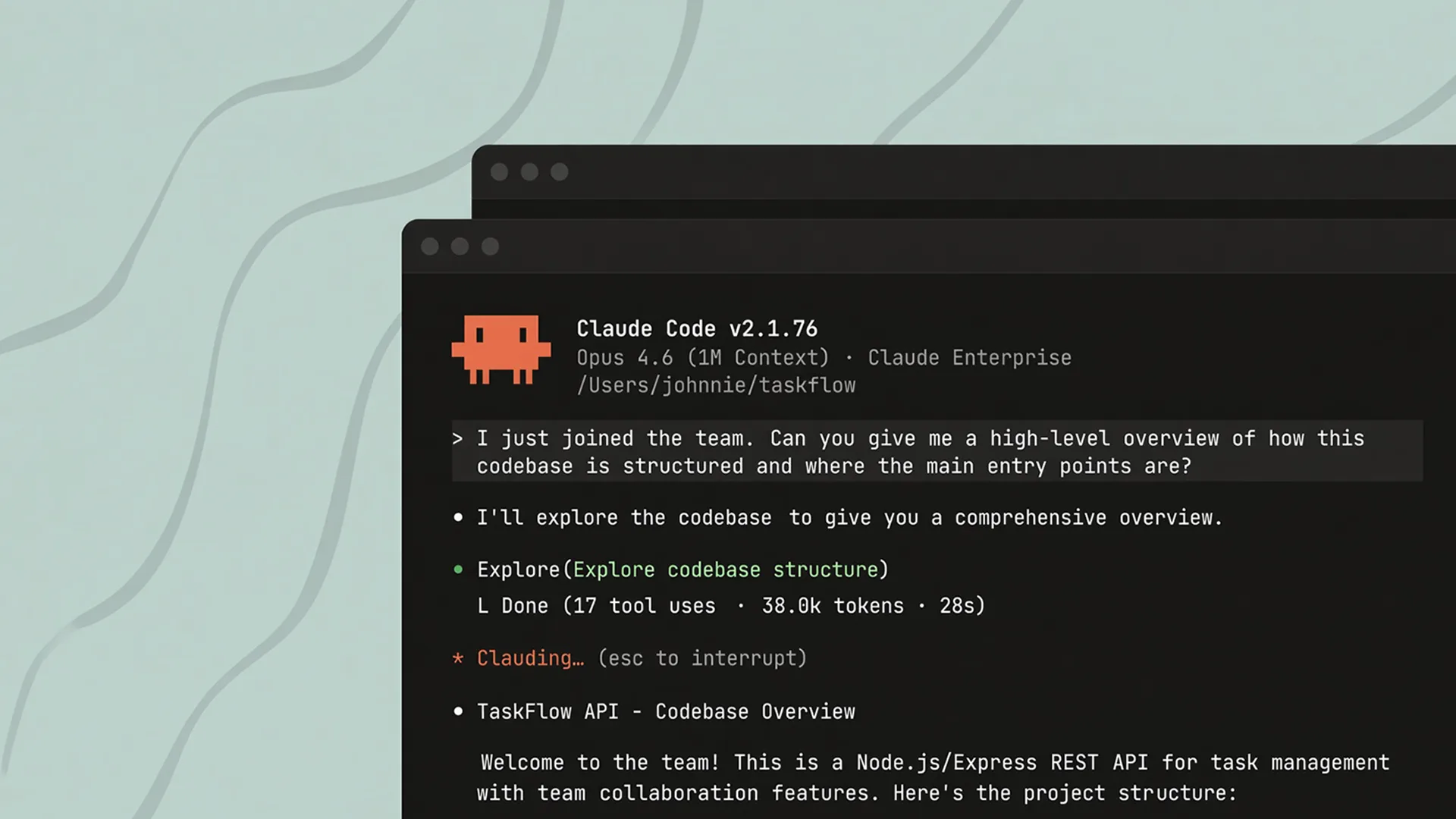
A 22-year-old developer can use Claude Code to write a beautiful React component in 30 seconds.
A founder who spent 20 years building companies uses Claude Code to ship a production SaaS in 32 days. With billing. With compliance. With onboarding flows that reduce churn. With error handling for edge cases the 22-year-old does not know exist yet.
The difference is not speed. The difference is surface area.
AI collapsed the cost of writing code. It did not collapse the cost of knowing what to build. And knowing what to build is a function of scar tissue, not syntax.
System thinkers win the AI era
Most developers think in features. Build the login page. Build the dashboard. Build the settings screen.
Founders who have done everything think in systems. Login connects to billing connects to permissions connects to support connects to compliance connects to the 2 AM page when someone’s credit card declines and they lose access to their data during a quarterly audit.
That mental model is the prompt. Not the words you type into the terminal. The mental model you carry from building four companies, from holding three C-level roles simultaneously, from shipping SEC-regulated investment platforms and AI-native tax engines and CRM operating systems across 7+ industries.
When I sit down with Claude Code, I am not writing prompts. I am replaying 20 years of decisions at machine speed. Every failed deploy. Every compliance audit. Every support ticket that revealed a UX gap. Every billing edge case that cost a customer. All of it compresses into the instinct that tells me what to build next and what to skip.
AI does not replace that instinct. It amplifies it.
The 200 things that can go wrong
A junior developer using Claude Code ships the happy path. The product works if everything goes right. The form submits. The page loads. The payment processes.
A founder who has been in the trenches for two decades ships the unhappy paths. What happens when the payment fails on the third retry? What happens when a user signs up with an email they do not control? What happens when the state mutation hits a race condition during a concurrent session? What happens when your biggest customer hits your API rate limit at 11 PM on a Friday?
I know what happens because I have been on the other end of every one of those calls.
Claude Code does not know these edge cases exist until you tell it they do. That is the gap. AI will happily build you a product that works perfectly in a demo and fails catastrophically in production. The only thing standing between those two outcomes is the person directing the AI. Their experience. Their judgment. Their scar tissue.
20+
Years building
4
Companies founded
32
Days to production SaaS
243K
Lines of code
When I built Orbyt, I did not spend 32 days writing code. I spent 32 days making 10,000 micro-decisions that Claude executed instantly. Which auth provider. Which billing model. Which error states to handle. Which permissions to enforce. Which data to cache. Which API calls to debounce. Which onboarding steps to cut. Each decision took seconds because I had made some version of it before, across four companies, over 20 years.
That is the unfair advantage. Not the coding. The deciding.
The moat is not where you think
Everyone talks about AI moats in terms of data, models, and infrastructure. Those are real but temporary. Models converge. Data becomes available. Infrastructure commoditizes.
The permanent moat is operational intelligence. Knowing how a real business actually runs. Not the theory. The reality.
A founder who has done payroll knows why your billing system needs to handle prorated mid-cycle upgrades. A founder who has managed support knows why your error messages need to be specific enough to resolve the issue without a ticket. A founder who has run marketing knows why your onboarding flow needs to deliver value in under 90 seconds. A founder who has handled compliance knows why your audit trail needs to capture state transitions, not just current state.
No amount of AI capability replaces that knowledge. And no amount of coding skill substitutes for it.
This is why the solo founder era is not about young developers with AI tools. It is about experienced builders who finally have execution capacity that matches their vision.
The compounding effect
Every year of experience is a multiplier on AI output. Not a linear one. An exponential one.
A developer with 2 years of experience can use Claude Code to build features faster. A founder with 20 years can use Claude Code to build businesses faster. The difference is the layer of abstraction. Features versus systems. Tasks versus strategy. Code versus judgment.
Here is what compounds:
Domain expertise
I have shipped in fintech, tax, proptech, CRM, ERP, healthcare, and real estate. Every domain taught me constraints that transfer. SEC compliance patterns apply to healthcare data handling. Tax workflow compression applies to insurance claims processing. The cross-domain pattern recognition is the real multiplier.
Failure patterns
I know 50 ways a SaaS product can fail in the first year because I have lived most of them. Each failure pattern is now a constraint I can hand to Claude in a single sentence. “Handle the case where a user starts onboarding, abandons it, and returns three weeks later with a different email.” That one sentence encodes a failure I spent a week debugging in 2016.
Integration thinking
The hardest part of building software is not the individual components. It is how they interact under stress. Billing talks to auth talks to permissions talks to analytics talks to support. A founder who has maintained that web of dependencies for years can see the integration risks before the first line of code is written.
Taste under pressure
When you have shipped dozens of products, you develop an instinct for when something is good enough and when it is not. AI generates options. Taste selects. Selection speed is a function of experience, and experience is a function of years in the arena.
The numbers
I built Orbyt in 32 days. 243,000 lines of code. 4,124 tests. Full billing integration. Multi-tenant architecture. Compliance-ready infrastructure. One person. $400 in total cost.
That is not an AI story. That is a judgment story. The AI wrote the code. I made the decisions. And those decisions drew on 4 companies founded, 3 C-level roles held simultaneously, $383M+ in enterprise value delivered, platforms built across 7+ regulated industries, and 20+ years of building, shipping, breaking, and rebuilding.
Strip away the AI tools and those decisions still would have been correct. They just would have taken 18 months to execute instead of 32 days.
AI did not make me smarter. It made my experience liquid. Portable. Instantly executable. Every hard lesson from the last two decades became a prompt. Every scar became a shortcut.
The question for founders
If you have been building for 10, 15, 20 years, you are sitting on the most valuable asset in the AI era. Not your code. Not your network. Not your fundraising ability.
Your judgment.
Your ability to think in systems. To anticipate failure modes before they happen. To know what the customer needs before they ask. To make the 10,000 micro-decisions that separate a demo from a product and a product from a business.
AI tools are a lever. The longer your fulcrum, the more you move. And 20 years of scar tissue is the longest fulcrum in the room.
The question is not whether AI will change how you build. It already has.
The question is whether you realize the advantage you have been accumulating your entire career is now, for the first time, fully liquid.
See this in practice: Orbyt, built solo in 32 days and Taxa AI-native platform.
Related Reading